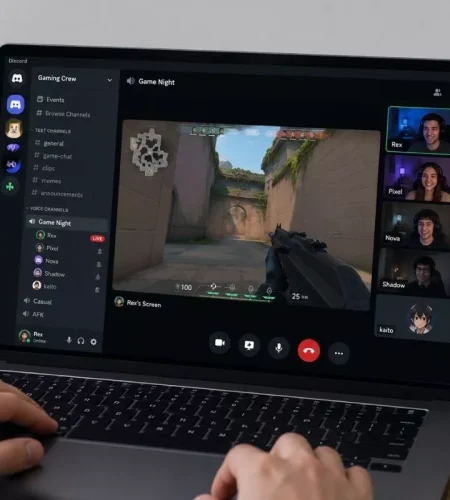
Late-night calls often start quietly. One person jumps into a voice channel, another joins to say what’s up, and before long, a few friends are talking over each other while someone streams a game.
That is one of the things that makes online gaming communities work so well. You do not need everyone in the same room to recreate the feeling of hanging out together. A Discord voice channel, screen share, and a group of friends can turn an otherwise quiet evening into something much more social.
For gaming communities, these casual sessions can become part of the server’s personality. People drop in to play, watch someone else, share clips, or simply talk while a game runs in the background.
Why Discord Makes Gaming More Social
Playing alone can be relaxing, but sharing the experience with friends creates a completely different atmosphere. A good voice channel adds reactions, jokes, friendly competition, and conversation that would not happen during a solo session.
Someone might be trying to finish a difficult level while everyone else gives terrible advice. Another person might stream a new game and spend more time explaining what they are doing than actually playing.
That spontaneity is part of the appeal.
A few simple activities can keep a late-night gaming session moving:
- Live reaction streams: Watch a friend try a new game or tackle a difficult challenge.
- Friendly trash talk: Competitive games naturally create jokes and rivalries between regular members.
- Shared discoveries: Someone can stream a new game, update, or interesting feature for everyone else to see.
- Casual conversation: Not every voice session needs to revolve around playing. Sometimes people simply want somewhere to hang out.
The important part is that the activity gives people a reason to join the call.
Bringing Shared Gaming Into the Server
Screen sharing makes it possible for one person to become the unofficial host while everyone else watches and comments.
This can work for traditional multiplayer games, single-player games, esports matches, or other forms of online entertainment. The format is flexible because the conversation often becomes just as important as what is happening on the screen.
For communities that discuss online casino gaming, the same principle can apply to live sessions and game streams. Platforms such as Hellspin can provide another type of entertainment for groups interested in slots and live casino experiences, although any real-money gaming should always be approached responsibly and within applicable age and local requirements.
The broader idea is not really about one particular type of game. It is about turning an individual digital activity into something people can experience together.
Setting Up a Shared Gaming Session
You do not need a complicated event structure to make a voice session work.
A few simple arrangements can make the experience much smoother:
- Choose a host: Have one person share their screen when the group is watching something together.
- Create a dedicated voice channel: A channel specifically for game nights makes it easier for members to know where to go.
- Add a clips channel: Members can post funny moments, impressive plays, screenshots, or memorable fails afterward.
- Use event reminders: If your community regularly hosts sessions, let members know when the next one is happening.
If your server already uses Discord heavily, you can also give the community a stronger visual identity. A recognizable avatar can make members easier to identify in busy servers, while coordinated banners can give the community a more polished appearance.
For inspiration, you can browse Discord PFPs or explore Discord Banners when creating a consistent look.
The Power of Shared Hype
The best moments in a voice channel are rarely planned.
Someone might suddenly pull off an unexpected play. A player could discover something nobody else knew about. A ridiculous mistake can become an inside joke that survives for months.
That shared reaction is what makes voice sessions different from simply watching a video or playing alone.
Even a relatively small server can develop its own traditions. Maybe Friday night becomes game night. Maybe everyone watches new releases together. Maybe members jump into voice whenever somebody starts streaming.
Over time, these small habits become part of the community culture.
When the Microphones Go Wild
The funniest sessions are often the least organized.
A conversation might start with someone asking which game everyone is playing and somehow turn into an hour-long argument about the best character, worst weapon, or most ridiculous gaming moment anyone has experienced.
Then somebody starts streaming.
Suddenly everyone is paying attention to the same screen. People start making predictions, giving completely unsolicited advice, and reacting whenever something unexpected happens.
That unplanned interaction is valuable because members are not simply consuming content. They are participating in it together.
Give Your Community a Recognizable Identity
Late-night voice sessions become more memorable when members recognize the people around them.
Profile pictures, usernames, banners, and bios all contribute to that identity. A member who regularly joins game nights may become recognizable simply because everyone associates their username and avatar with those sessions.
A consistent profile can help with that.
For example, a member might use an anime avatar, a gaming-themed banner, and a short bio that reflects their personality. Others may choose matching avatars when playing together as a group.
If you want ideas for the written side of a profile, Discord Bio Ideas can help create a profile that feels less generic.
For communities organizing regular events, a Discord Timestamp Generator can also make it easier to share event times that automatically display according to each member’s local time.
Keeping the Server Vibe Alive
One of the biggest advantages of online communities is that friendships do not have to depend on everyone being available at the same physical location.
People can join from different cities, different schedules, and different time zones. Someone may only have thirty minutes available, while another person stays in the call for several hours.
That flexibility makes Discord particularly useful for gaming groups.
The key is not to force activity. If every voice channel becomes an organized event, members may stop treating the server as somewhere they can casually drop in.
Leave room for spontaneous conversations.
A member should be able to jump into a voice channel, see a friend streaming, say hello, and stay for five minutes—or five hours.
Make Casual Sessions Part of the Culture
The strongest gaming communities are not necessarily the ones with the most channels or the largest member counts.
They are often the ones where members know what to expect from the community.
A regular voice session can become one of those expectations. It gives people a familiar place to meet, play, watch, joke around, and catch up.
You can support that culture with simple additions such as:
- Weekly game nights
- Casual voice channels
- Community streaming sessions
- Clip-sharing channels
- Game recommendation threads
- Watch parties
- Member-created events
- Temporary channels for major releases
The goal is to create opportunities rather than force participation.
Final Thoughts
The late-night voice channel works because it recreates something that online gaming can sometimes lose: the feeling of simply hanging out with other people.
A screen share gives everyone something to watch. Voice chat provides the conversation. Profile identities help regular members recognize each other. Over time, those small interactions can turn an ordinary Discord server into a genuine gaming community.
And the best part is that it does not require a huge event or complicated setup. Sometimes all it takes is one person joining a quiet voice channel, starting a stream, and giving everyone else a reason to drop in.
Comments