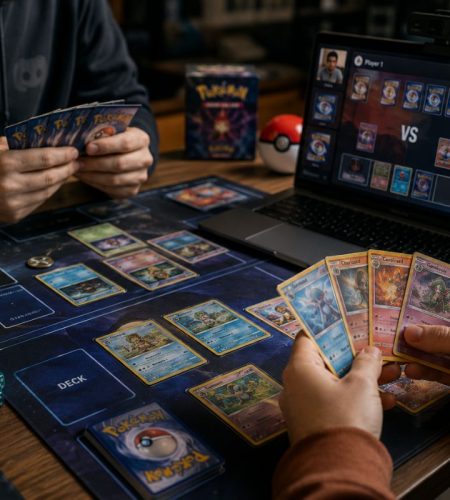
Trading card games are built around physical cards, but much of modern TCG culture now develops online. Players discuss deck construction, compare collections, organize remote matches, share tournament results, trade cards, and build identities around the games they follow.
That activity gives online communities something more durable than short-term gaming discussion. TCG communities continuously generate strategy debates, collecting goals, new-player questions, deck showcases, marketplace conversations, and event coverage.
For community owners, moderators, creators, and players, understanding TCG culture makes it easier to build online spaces that people return to regularly.
TCG Communities Create a Shared Technical Language
Every trading card game develops its own terminology. Players discuss archetypes, engines, side decks, ratios, consistency, matchups, card advantage, sequencing, and changing competitive environments.
Learning that language gives members a stronger sense of participation. Experienced players can discuss highly technical interactions, while newer members can gradually understand the same concepts through repeated community exposure.
This produces natural knowledge sharing. A deck-building question can turn into a detailed discussion about probability, card interactions, tournament rules, or alternative strategies.
That depth is one reason TCG communities can remain active between major product releases.
Deck Building Creates Constant Conversation
A TCG deck is rarely a finished object. Players make changes as they acquire cards, discover weaknesses, encounter different opponents, or respond to changes in the competitive environment.
Online communities make that testing cycle faster.
Players can post deck lists and ask others to evaluate consistency, card ratios, side-deck choices, or specific matchups. Other members can suggest substitutions without everyone needing to meet at the same physical game store.
Useful Deck Discussion Channels
A well-organized community can separate conversations into areas such as:
- Beginner deck help
- Competitive deck building
- Individual archetypes
- Card rulings
- Tournament preparation
- Collection showcases
- Trading and marketplace discussion
Separating topics makes technical discussions easier to search and prevents important information from disappearing inside one general chat.
Physical Card Care Becomes Part of Online Identity
TCG culture is not limited to winning games. How players organize and present their decks also becomes part of the hobby.
Deck boxes, binders, playmats, tokens, and sleeves provide opportunities for players to personalize equipment while protecting cards. Yu-Gi-Oh players, for example, may choose appropriately sized Yugioh card sleeves for decks used during regular play or stored in collections. TitanShield’s current Yu-Gi-Oh range uses Japanese-size sleeves intended for the smaller dimensions of Yu-Gi-Oh cards.
Sleeves also have a competitive function. Konami’s current tournament policy allows protective sleeves and requires them at higher-tier Yu-Gi-Oh events. Main and Side Deck sleeves must be consistent in color, wear, and design so individual cards cannot be identified from their backs.
These details create another layer of community conversation, from deck presentation to tournament preparation.
Online Profiles Become Part of TCG Identity
Members of active gaming communities quickly become recognizable through usernames, avatars, roles, banners, and recurring interests.
PfpFinder has noted the same pattern in Discord gaming communities, where profile pictures and other visual profile elements become part of how members recognize one another over time.
TCG players can use avatars based on favorite monsters, card art styles, deck themes, characters, or original designs. If you’re looking for a new profile image, you can browse Discord PFPs and find a style that fits your gaming identity.
Community roles can add another layer by identifying game formats, experience levels, tournament achievements, or preferred archetypes.
The result is a recognizable identity that exists beyond an individual match.
Remote Play Connects Physical and Digital TCG Culture
TCGs are unusual because physical cards can participate directly in online communities.
Remote matches allow players to position a camera over a real playing field and compete with someone elsewhere. Konami’s official Remote Duel program uses Discord to support remote Yu-Gi-Oh tournaments and community communication.
This creates a bridge between collecting physical products and participating digitally.
Someone without a large local player group can still discuss decks, find opponents, participate in events, and become known inside a broader community.
Collecting Gives Communities Long-Term Content
Competitive discussion changes quickly, but collecting creates another form of engagement.
Members can discuss card conditions, rarities, artwork, storage, set completion, favorite releases, and collection organization without needing to follow tournament play.
This broadens the audience.
A strong TCG community may contain:
- Competitive players
- Casual players
- Collectors
- Traders
- Content creators
- New players learning the game
These groups overlap but do not need identical interests. Allowing several participation styles helps prevent a server or forum from becoming dependent on one competitive format.
Trading Requires Strong Community Standards
Trading can strengthen a TCG community, but it also creates operational risk.
Community owners should establish clear rules before allowing buying, selling, or trading discussions.
Build Basic Marketplace Controls
Useful rules can include:
- Require clear photographs of card condition.
- Prohibit misleading descriptions.
- Separate trade discussions from general channels.
- Keep public records of completed transactions where appropriate.
- Define rules for pricing discussions.
- Explain that moderators do not automatically guarantee private transactions.
- Create a process for reporting suspicious activity.
Reputation systems can help regular members identify established participants, but they should never replace reasonable caution.
Moderators also need a clear distinction between resolving community-rule violations and attempting to arbitrate every private financial dispute.
Tournaments Give Communities Recurring Events
Regular events create reasons for members to return on specific dates rather than checking a server only when they need information.
These do not always need to be large competitive tournaments.
Communities can organize beginner nights, archetype challenges, deck-building competitions, collection showcases, remote matches, or discussions following major events.
Official Yu-Gi-Oh Remote Duel infrastructure demonstrates that Discord can support organized tournament communication as well as ordinary community discussion.
Recurring activities also give community moderators measurable signals about which formats and topics generate genuine participation.
For communities that organize events across different time zones, a Discord Timestamp Generator can also make tournament and match times easier for members to understand.
Good Moderation Protects TCG Culture
TCG discussions can become highly technical and competitive. That is useful until disagreements become personal.
Moderators should separate criticism of a deck choice from criticism of the person playing it. New players need space to ask basic questions without being mocked, while experienced players need channels where advanced discussion can continue without constant repetition.
Rules should also address spoilers, counterfeit cards, inappropriate trades, harassment, spam, and misleading tournament information.
Good moderation does not remove disagreement. It keeps disagreement focused on cards, rules, strategy, and evidence.
TCG Culture Gives Online Communities Staying Power
Trading card games generate a particularly strong combination of competition, collecting, personalization, technical discussion, and social identity.
Players can participate without following exactly the same part of the hobby. One member may spend hours optimizing tournament decks, while another collects artwork and another primarily joins remote matches.
That variety gives community owners multiple ways to keep members involved.
PfpFinder’s coverage of gaming communities makes a similar point: features alone do not keep an online community active. Community culture and repeated interaction are what give people reasons to return.
For TCG communities, that culture develops around shared knowledge, recognizable identities, deck experimentation, physical collections, competition, and the simple pleasure of talking with people who understand why one card choice can generate an hour-long debate.
Comments